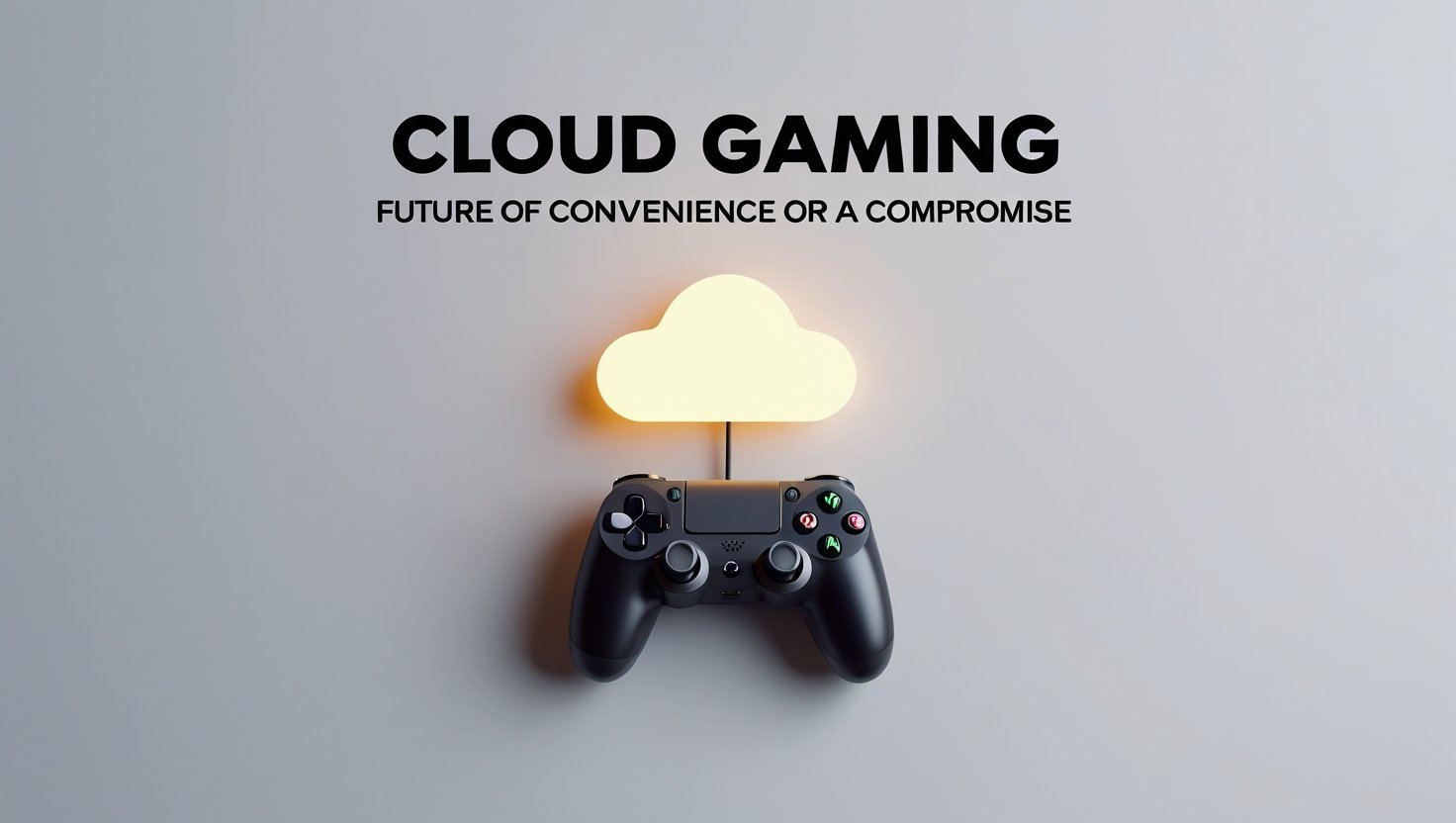
Let’s be real, how many of us have dreamt of playing the latest AAA games without dropping a fortune on a high-end PC or console? I know I have. That’s where cloud gaming swoops in like a superhero… or does it? I’ve spent hours testing services like Xbox Cloud Gaming, NVIDIA GeForce Now, and Google Stadia (RIP, by the way). Sometimes it feels like magic; other times, it’s a laggy mess that makes me want to throw my controller. So, is cloud gaming truly the future of convenience, or is it just one big compromise? Grab your snacks, we’re diving deep.
What Exactly is Cloud Gaming?
Okay, let’s break it down like I’m explaining it to my mom. Cloud gaming lets you play video games streamed directly from powerful servers over the internet. Think of it like Netflix, but for games. You don’t need a fancy graphics card or the latest console—just a decent internet connection and a device (yes, even your phone or tablet).
I remember the first time I tried it. I opened my laptop, clicked a button, and was playing Forza Horizon 5 within seconds. No downloads, no updates, no 100GB storage eating up my SSD. It felt… illegal. But this convenience comes with questions. Who owns the games? What happens if the internet dips? And why does it sometimes look like I’m playing through a foggy window?
Why It Feels Like The Future:
Let’s talk about the good stuff first. Because when cloud gaming works, it’s honestly mind-blowing.
1. No More Hardware Headaches:
I’ll admit it, I’m not made of money. I can’t afford a $1,699.20 GPU every two years. With cloud gaming, all the heavy lifting happens on remote servers. You can game on a potato-quality laptop, your phone, or even your smart TV. I’ve played Cyberpunk 2077 on my Android phone with a clip-on controller. Felt like a wizard.
2. Play Instantly, No Waiting:
We’ve all been there: excited to play a new game, only to stare at a progress bar for hours. With cloud gaming, you hit “Play” and you’re in. It’s perfect for those of us with limited patience (and limited storage).
3. Gaming On the Go:
Stuck in a waiting room? On a lunch break? Fire up your phone and game. I’ve grinded through Genshin Impact sessions during commute time. It’s a game-changer for busy gamers.
The “Compromise” Side:
Now, let’s get into the not-so-glamorous part because cloud gaming isn’t all rainbows and high frame rates.
1. Internet: The Make-or-Break Factor:
If your internet has a bad day, your gaming session is ruined. I tried cloud gaming on a 40 Mbps connection, recommended speed for HD, and still experienced stutters during action-heavy scenes. Input lag is real, and in competitive games like Fortnite or Apex Legends, milliseconds matter. You will lose fights because of lag, and you will rage.
2. Video Quality Isn’t Always Crisp:
Even with a good connection, compression is still an issue. Dark scenes look muddy, fast motion gets blurry, and overall, it rarely feels as sharp as native gameplay. It’s like watching YouTube on 480p after being used to 4K Blu-rays.
3. You Don’t “Own” Anything:
This one hurts. With cloud gaming, you’re essentially renting games. If the service shuts down (looking at you, Google Stadia), your library vanishes. Poof. Gone. That’s tough to swallow for collectors like me.
My Personal Experience:
I’ve had moments where cloud gaming amazed me. Playing Halo Infinite on my phone with an Xbox controller felt like the future was here. But I’ve also had moments where the screen froze mid-boss fight, or the graphics downgraded so much I couldn’t spot enemies.
It’s not all bad, though. Services like GeForce Now let you play games you already own on platforms like Steam. That’s a huge plus. But then there’s the subscription cost, pile enough of them, and you’re spending as much as you would on hardware.
Who Is Cloud Gaming REALLY For?
After all my testing, I think cloud gaming is perfect for:
- Casual gamers who don’t want to invest in expensive hardware.
- Gamers who travel frequently or game on multiple devices.
- Anyone curious about trying new games without downloading them.
But it’s probably NOT for:
- Competitive esports players who need zero lag.
- Graphics snobs who want the highest settings.
- Gamers with slow or unreliable internet.
The Bottom Line:
So, back to the big question: is cloud gaming the future, or is it one big compromise? Honestly? It’s both.
It’s the future because it makes gaming more accessible. Not everyone can afford a PS5 or a gaming PC, but many can afford a $500–1000 monthly subscription. It’s a compromise because you sacrifice performance, visual quality, and ownership for that convenience. As internet speeds improve (hello, 5G and fiber optics) and tech gets better, the compromises will shrink. But for now, manage your expectations. It’s awesome, but it ain’t perfect.
FAQs:
1. Is cloud gaming expensive?
It can be, with subscriptions ranging from ₹500 to ₹1500/month, plus possible game purchases.
2. Can I play cloud games offline?
No, a stable internet connection is mandatory.
3. What internet speed do I need?
At least 15–20 Mbps for HD, 35–50 Mbps for 4K.
4. Are there free cloud gaming services?
Yes, some like NVIDIA GeForce Now have free tiers with limitations.
5. Is there input lag?
Yes, especially in slower internet conditions.
6. Can I use any controller?
Most services support popular controllers like Xbox, PlayStation, or even Bluetooth ones.