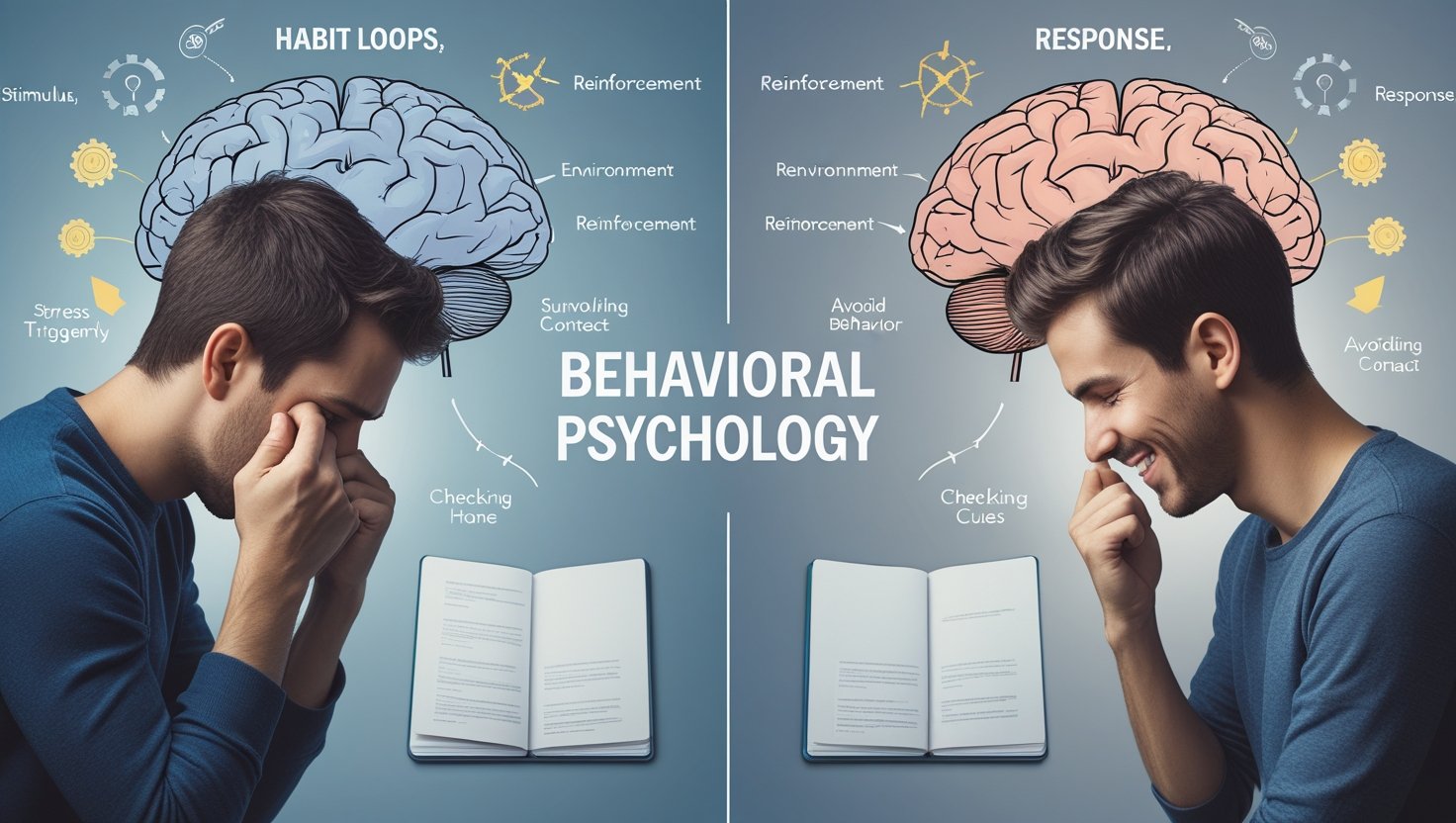
Behavioral psychology is one such field that tries to understand the behavior of humans. In it, the focus is only on those things which can be directly observed, i.e., the actions or behaviors performed by a human. The basic idea of this field is that every human’s behavior is a reaction to some external stimulus, and this can be studied scientifically. Behavioral psychology is counted among those disciplines of psychology that rely more on research and experiments. This approach says that if the behavior of a person is to be understood, then the focus should be on their behavior and not on their inner emotions or thoughts. Behavioral psychologists use such patterns.
There are many factors that control the behavior of humans, such as reward, punishment, and conditioning. Behavioral psychology started at the beginning of the 20th century when psychologists started to think that if psychology was to be made a science, then we would have to work on those things that can be measured. As John B Watson had said that psychology should be confined only to behavior. Even today, this approach is used in schools, therapy, and training systems. Therefore, every person needs to understand it. This blog will tell you how behavioral psychology works, how conditioning can change human behavior, and how it is a part of our daily routine. that it makes an impact on life.
The Foundations of Behaviorism:
The basis of behavioral psychology is behaviorism, which was developed at the beginning of the 20th century. According to behaviorism, every human behavior is a reaction to some stimulus and can be predicted and controlled. John B. Watson is considered the pioneer of behaviorism. He said that if psychology is to become a science, then we should focus only on observable behavior. He considered mental processes like thoughts and feelings as irrelevant. After Watson, B.F. Skinner took this theory further. Skinner introduced the concept of operant conditioning in which behavior is shaped through reward or punishment.
He believed that if a behavior is followed by a reward, then that behavior is repeated, and if a punishment is not followed, then that behavior is repeated. if we get a reward, then that behavior decreases. The core concepts of behaviorism include reinforcement, punishment, and conditioning. Reinforcement is of two types, positive and negative, and the aim of both is to promote behavior, while punishment aims to stop some undesirable behavior. These theories are not just confined to the laboratory, but their practice is also visible in everyday life, like giving prizes to students in schools for good work or scolding them for mistakes. All these are behaviorist ideas. These foundations helped in making psychology a measurable and predictable science, and even today, they are used in therapy, education, and even marketing.
Classical vs. Operant Conditioning:
Classical and operant conditioning are two important pillars of behavioral psychology. The concept of classical conditioning was given by Ivan Pavlov when he experimented on dogs. He observed that if a neutral stimulus is repeatedly presented with food, the dog associates that stimulus with food and shows salivation on that stimulus every time. This is called classical conditioning. This is learning through association. On the other hand, the concept of operant conditioning was given by B.F. Skinner. In this, behavior is controlled through consequences. If a reward is received after a behavior, then that behavior increases, and if punishment is received, then that behavior decreases. In operant conditioning, the individual plays an active role, whereas in classical conditioning, the subject is passive.
Classical conditioning is based on naturally occurring responses whereas operant conditioning focuses on deliberate actions and their outcomes It is important to understand both of these because these apply in everyday life For example, when a child gets praise for completing his homework, he works harder – this is operant conditioning And if someone has an emotional reaction due to smelling a specific perfume or remembering something, this is the result of classical conditioning Both these processes explain how the external environment controls our behavior and how we learn the behavior consciously or unconsciously.
Applications of Behavioral Psychology in Daily Life:
Behavioral psychology is not just a part of theory; but it is deeply involved in everyday life. It is most prevalent in education. Teachers use reinforcement techniques to shape the behavior of students, such as giving good grades or praising them, so that students remain motivated. This theory is also very useful in parenting. If a child is rewarded for showing good behavior, that behavior increases, and if he is punished for bad habits, that behavior decreases. In therapy, behavioral techniques such as behavior modification and exposure therapy are quite successful. Especially in cases of anxiety and phobias, the patient is exposed to stimuli step by step through behavioral therapy.
This leads to the fear of the person, and gradually, that behavior is changed. Behavioral principles are also applied in the workplace, like positive feedback and incentives are used to increase productivity. This is also used in even marketing and advertising, where brands build customer loyalty through reward associations. This theory proves that changing behavior is not difficult; only the right strategy and consistent reinforcement are required. When you understand that behavior is influenced by the external environment, you can improve many areas of your life, like forming habits, removing laziness, or inculcating discipline; everything is possible with the tools of behaviorism.
Criticisms and Limitations of Behavioral Psychology:
While behavioral psychology has introduced many useful techniques and concepts, some criticisms are also made of this approach. The most important point is that this theory ignores the emotions, thoughts, and feelings within a human being. Behaviorism says that only those things should be studied that can be observed, but critics say that humans are not just the name of behavior; rather, their feelings and thoughts are equally important. Another criticism of this theory is that it treats human behavior as machine-like, as if every action is a response to a stimulus. While in reality human behavior is quite complex, it includes emotions, personal values , and cognitive processes.
For this reason, behaviorism is also called an incomplete approach and for this reason cognitive behavioral theories have gained a place in modern psychology Cognitive behavior therapy i.e. CBT combines behavioral techniques with thinking patterns that work on both thought and action It is also said that behaviorism only brings short-term changes but for long-term behavioral stability, deeper understanding and understanding of emotional factors is necessary Despite this, behaviorism is a very practical and effective approach, especially when someone needs to modify a specific behavior Despite the limitations of this theory, its contribution is very significant in psychology and it is still extensively used in modern therapies and learning environments.
Conclusion:
Behavioral psychology gives us a lens through which we can understand our behavior and improve it. This theory tells us that there is an external trigger for every action we do, and if we identify that trigger and its response, we can also control our behavior. Whether it is procrastination or laziness, or any bad habit, the behavior can be gradually changed with the tools of behavioral psychology. Like the concepts of reinforcement, punishment, and conditioning, we learn how behavior is formed and how it can be modified. Every person has this ability. so they should manage their behavior by understanding their environment.
This approach gives us a way to understand not only others’ behavior but also our behavior When we know why we do a particular action, we are also ready to improve it Behavioral psychology also tells us how positive behavior can be grown and negative behavior can be eliminated Through this theory we can bring discipline in our routine and can bring productivity and balance in our life Ultimately it can be said Behavioral psychology is an approach that is practical, measurable, and life-changing; we just need to understand and apply it.